



September 8, 2026
Flu season has a way of catching families at the worst possible time. A fever starts overnight, someone wakes up with a cough, and suddenly you're trying to decide what to do, whether you need medication, and when it's time to call a clinician.
But many of those decisions can be considered before anyone gets sick.
In this GoldCare Medical Townhall, Dr. Simone Gold, Lisa Sikorski, NP, and Audra Hanners, NP, discuss how preparation, education, and access to trusted clinicians can help families approach seasonal illness with greater confidence.
One of the central themes of the conversation is simple: don't wait until you're sick to start thinking about what you'll do when illness arrives.
Dr. Gold explains that seasonal respiratory illnesses are predictable. While families can't prevent every illness, they can think ahead about their health, know where they'll turn for care, and have practical resources available before they're urgently needed.
Preparation isn't about expecting the worst. It's about reducing the uncertainty that often appears when someone suddenly becomes sick.
Preparation also begins long before symptoms appear.
Audra and Lisa discuss the importance of supporting overall health through nutrition, sleep, movement, stress management, time outdoors, healthy relationships, and other everyday wellness habits.
Audra introduces three simple ideas—comedy, community, and creativity—as ways to reduce stress and support well-being. From laughter and meaningful relationships to hobbies and activities you enjoy, managing stress can be an important part of caring for the whole person.
Most seasonal illnesses can be managed without intensive medical intervention, but that doesn't mean every symptom should simply be ignored.
Drawing from her extensive critical care background, Lisa explains how waiting too long to seek appropriate care can become especially concerning for people with underlying health conditions or compromised immune systems.
The conversation emphasizes the value of having a clinician you can reach before a manageable problem becomes an emergency.
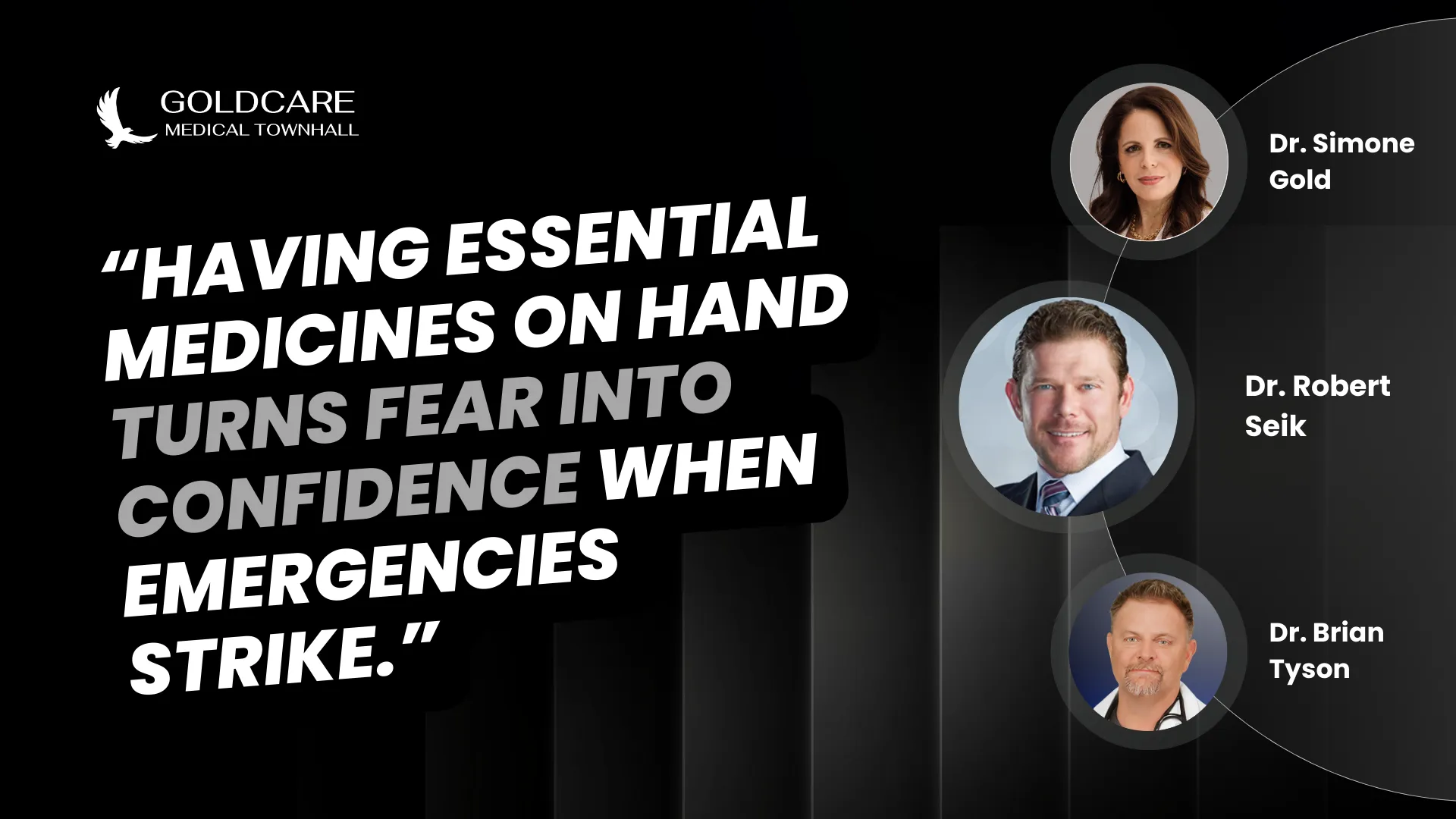
Dr. Gold also introduces GoldCare's approach to MedPacks, designed to give members access to commonly used prescription medications before an urgent situation arises.
The philosophy isn't to take medication at the first sign of illness. In fact, the clinicians repeatedly emphasize that many illnesses do not require antibiotics or other prescription medications.
Instead, members can obtain medications in advance, keep them available at home, and then consult a GoldCare clinician if symptoms develop to determine whether and how they should be used.
This separates the stress of getting access to a medication from the medical decision of whether you actually need to take it.
Having medication available doesn't mean every medication should be used.
The panel discusses the importance of distinguishing between viral and bacterial illnesses, avoiding unnecessary antibiotic use, and recognizing that medications can have risks and side effects even when they are valuable in the right circumstances.
Their approach centers on access paired with education and clinical guidance: having tools available while still making thoughtful, individualized decisions about when those tools are appropriate.
The Townhall also addresses questions surrounding seasonal flu vaccination, with each clinician sharing their own perspective and emphasizing informed decision-making.
More broadly, the discussion reflects GoldCare's approach to healthcare: giving patients access to information, allowing room for questions and different clinical perspectives, and helping individuals make decisions based on their circumstances rather than relying solely on a one-size-fits-all protocol.
The biggest takeaway from the conversation is that healthcare doesn't have to begin when something goes wrong.
By supporting your health before flu season, understanding your options, preparing your medicine cabinet, and knowing where you'll turn for trusted guidance, you can approach seasonal illness with a clearer plan.
Because the best time to prepare for illness is before you need the medicine, the appointment, or the emergency room.


.webp)




.webp)